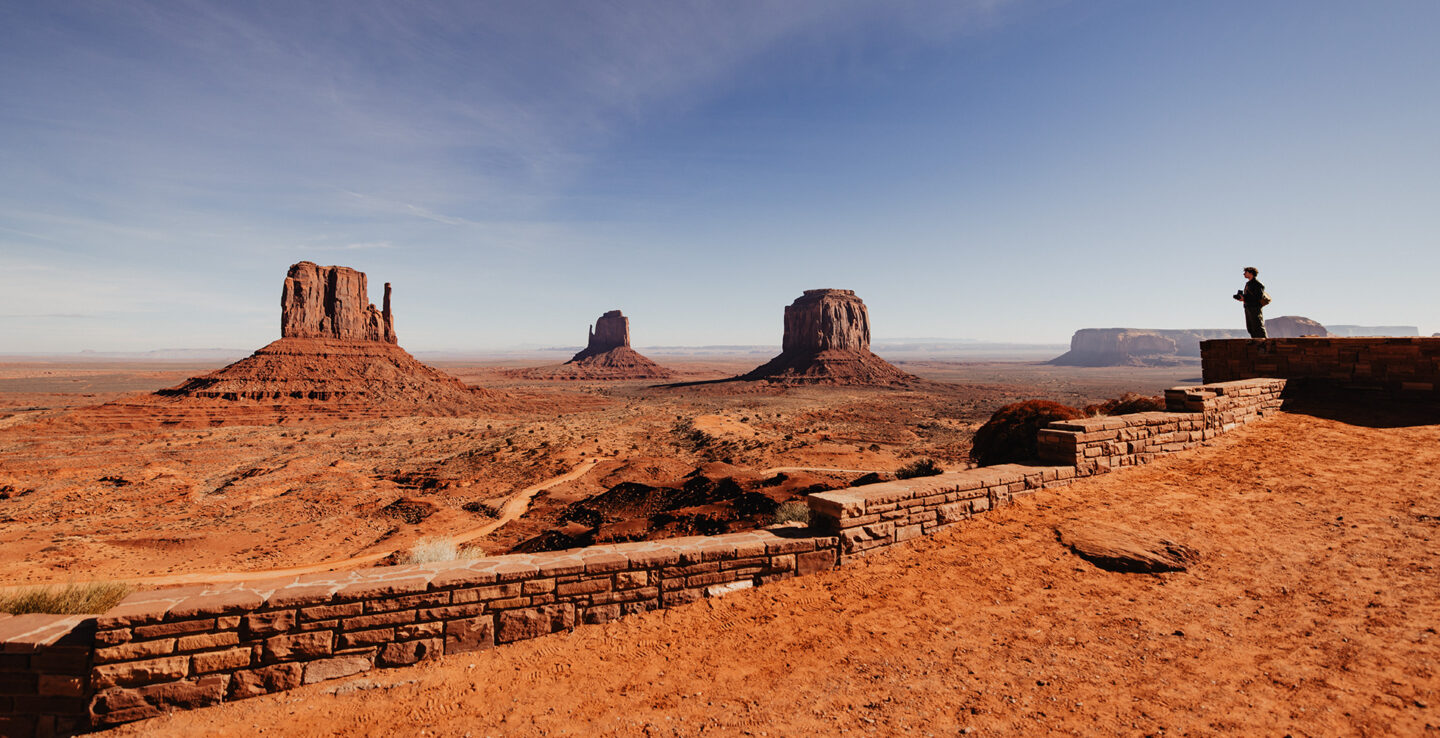
Monument Valley’s towering buttes and cinematic legacy set the stage for a trip full of red-rock wonders. Navajo culture and iconic film locations await at every turn.
Monument Valley – a sacred area of the Navajo Nation along the Arizona–Utah border – has played a central character in some of the most iconic American films of all time. That includes many by John Ford, a pioneering director known for elevating the Western genre into an art form from the late 1930s through the mid-1960s. Through visually captivating films such as “Stage Coach,” “Fort Apache” and “The Searchers” Ford explored themes of frontier hardship and the American identity amid Monument Valley’s towering buttes and mystical emptiness.
Beyond Westerns, the valley’s red rocks and vast skies were featured in “2001: A Space Odyssey” as an alien planet and in “Forrest Gump” during the title character’s cross-country run. Other cinematic classics such as “Easy Rider,” “Back to the Future Part III” and even Disney’s “Cars” have also captured the area’s quintessential scenery. To experience it for yourself, visit Monument Valley Navajo Tribal Park — a compelling place brimming with iconic scenery, rich Navajo culture and the artistry that’s inspired generations of creatives.
Long before movie directors set their sights on Monument Valley, the Diné (Navajo) people lived in harmony with this land. For the Navajo Nation, the valley is a place of spiritual significance, woven into creation stories and oral histories that define their cultural identity. These sacred landscapes, shaped by wind, water and time, are considered living entities. Many formations bear traditional Navajo names and are associated with deities and ceremonial practices passed down for generations.
Monument Valley first entered the Hollywood spotlight – thanks in part to Harry Goulding. The local trader brought photographs of the valley to director John Ford during the Great Depression, hoping to attract film crews and economic prosperity to the region. He and Ford’s efforts put Monument Valley on the map and helped craft the cinematic image of the West that endures to this day.
To honor Monument Valley’s deeper story, book a tour with a Navajo guide, who can share insights beyond what’s captured on camera. Many outfitters offer culturally respectful excursions that include storytelling rooted in Diné tradition, access to trails that aren’t open to the public and experiences such as Navajo taco tastings and grass dance demonstrations.
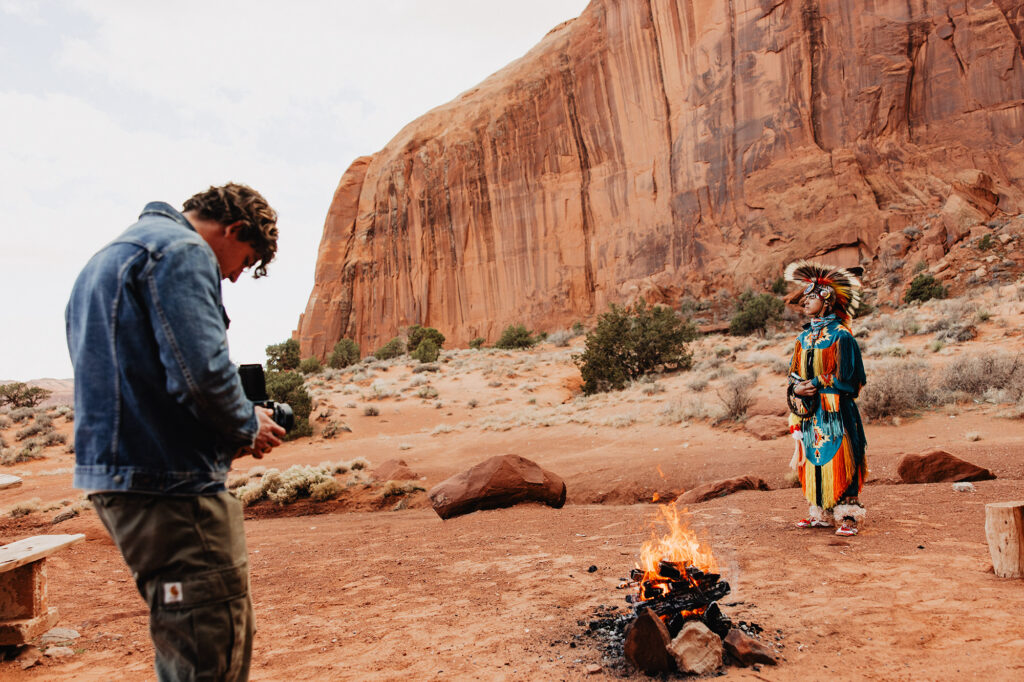
Book an expedition into the backcountry to view arches, petroglyphs and other landmarks. Then watch the sunset, enjoy a dinner of Navajo tacos and Native American dancing and drumming around the campfire.
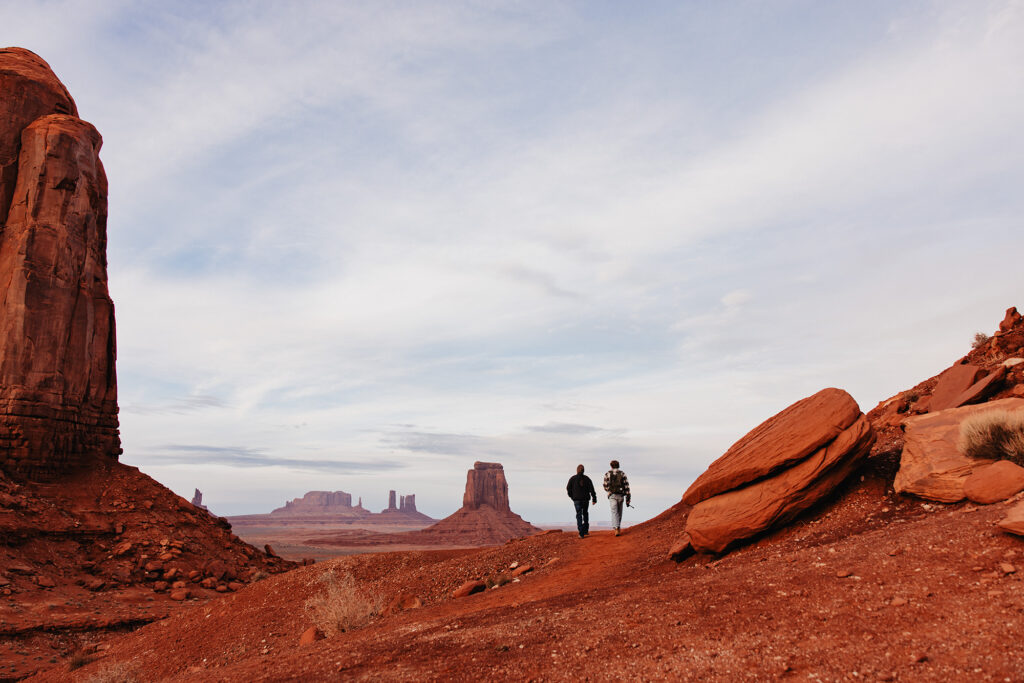
As you tour Monument Valley, expect to encounter some of the most photogenic rock formations in the Southwest. One of the best ways to take in the cinematic beauty is on a drive along the 27-kilometer scenic loop; just be sure to stick to designated roads and viewpoints.
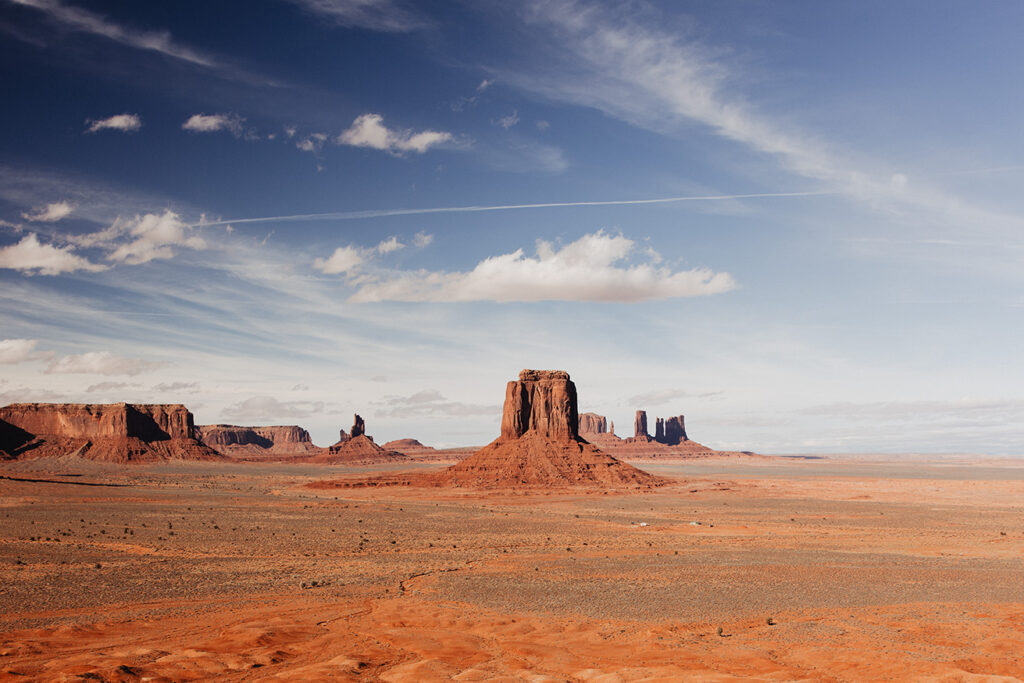
The valley’s most iconic formations, these twin sandstone buttes resemble outstretched hands rising from the desert floor. Sunrise and sunset cast dramatic shadows across their rugged red faces.
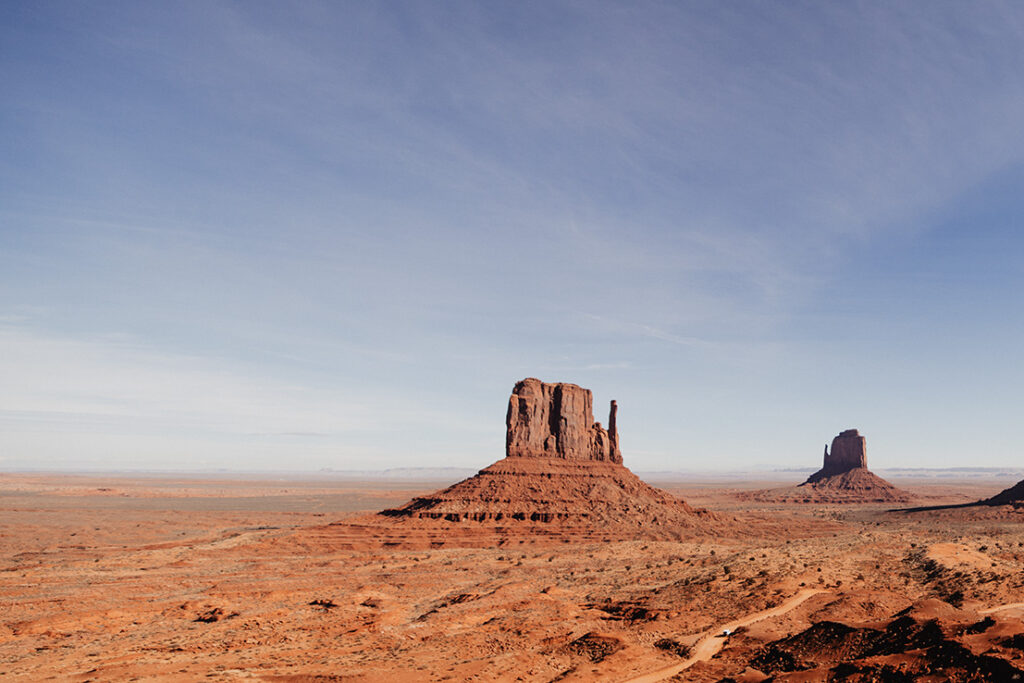
Standing proudly near the Mittens, Merrick Butte glows amber in golden hour light. It provides a striking counterpoint and one of Monument Valley’s most photogenic backdrops.
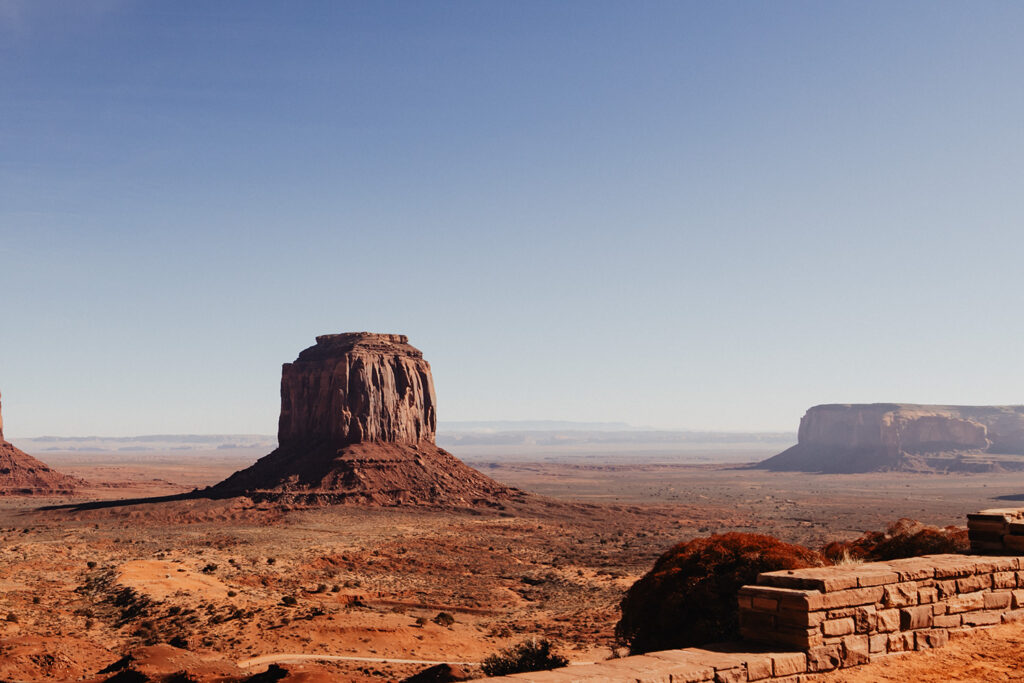
This overlook, one of the best places to soak in Monument Valley’s cinematic grandeur, is where the famed director staged countless scenes.
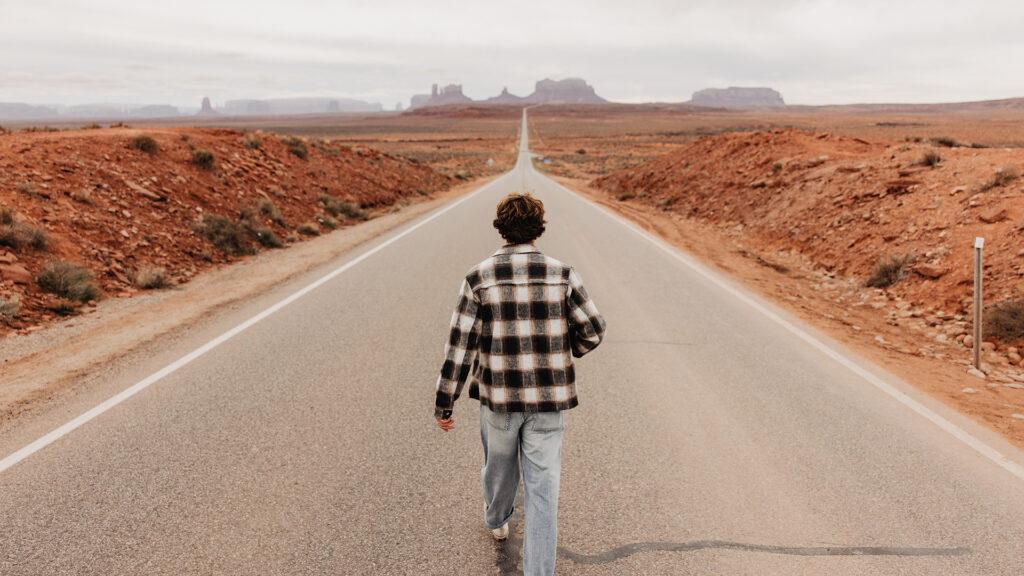
Just outside the park along Highway 163, this roadside stop marks where the title character famously ended his cross-country run. The straight desert highway view is unforgettable.
A slender sandstone spire rising dramatically from the valley floor, the Totem Pole is a sacred formation best admired from a distance on a guided Navajo tour.
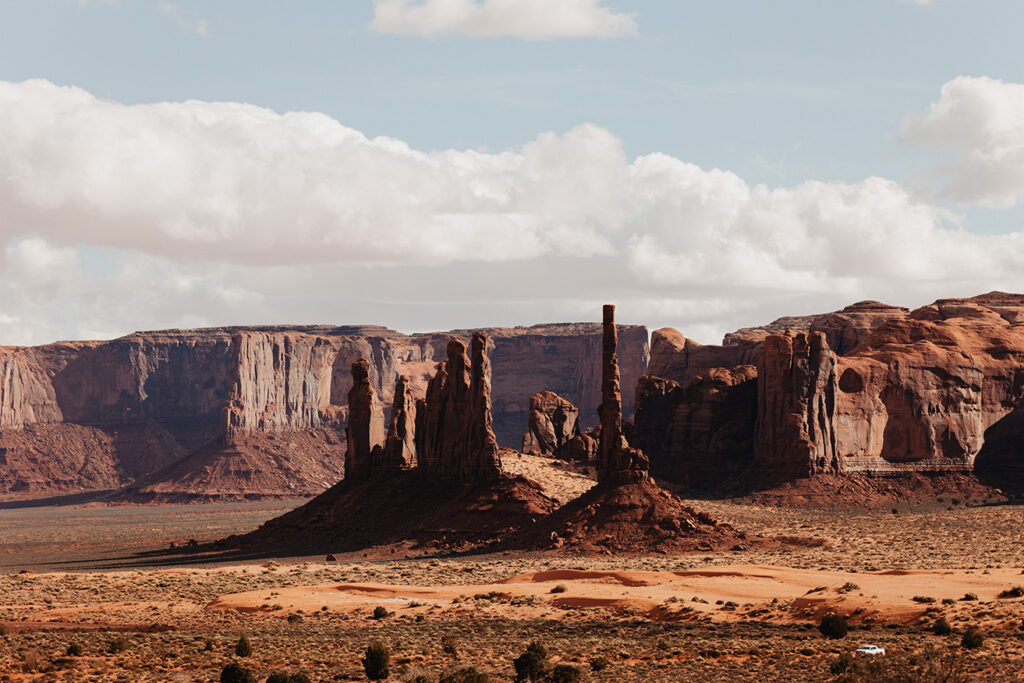
This striking rock formation resembles three robed figures standing shoulder to shoulder. Look closely to spot the tallest “sister,” said to resemble a nun in silhouette.
True to its name, this rounded sandstone formation looks remarkably like a resting camel. It’s a fun, easily recognizable landmark along the scenic drive.
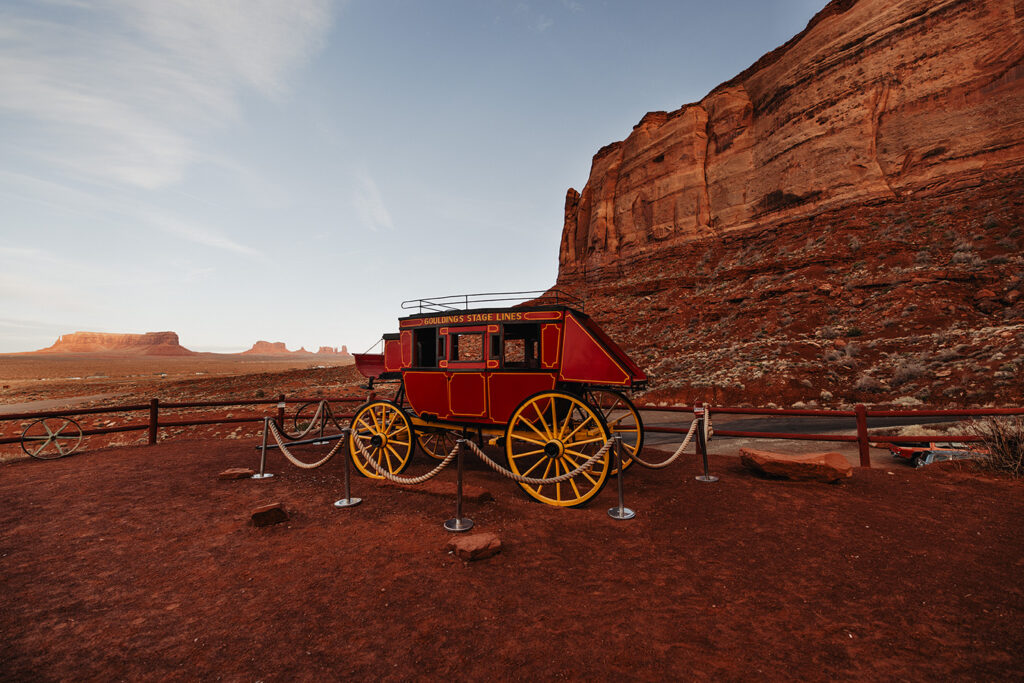
Book a stay at Goulding’s Lodge, whose rooms boast awe-inspiring views of the valley. The on-site museum spotlights Goulding and his wife, Leone; the lodge’s legacy as a trading post and cinematic landmark; and the history and resilience of the Navajo Nation.
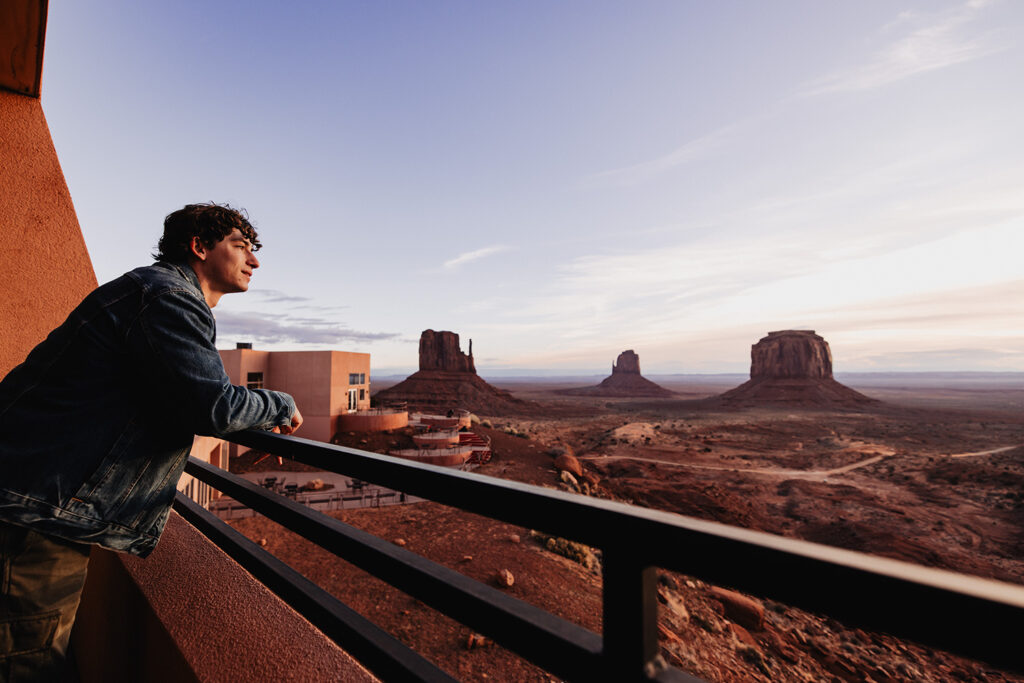
Another Navajo-run lodging option is The View Hotel, aptly named for its panoramic valley vistas and guest rooms featuring balconies. Its amenities include a restaurant and the Trading Post, where you can buy Navajo-made art, jewelry and rugs, plus memorabilia and souvenirs inspired by the films shot here.
Turn your Monument Valley experience into a road trip by adding these destinations:
Fly into Phoenix Sky Harbor International Airport, Arizona’s biggest metropolitan area known for big-city culture and scenic surroundings. Highlights include the Desert Botanical Garden, where more than 50,000 desert plants thrive alongside eye-catching red rocks of the Papago Buttes. Explore the Heard Museum, a nonprofit institution dedicated to American Indian art and culture. Spend a few hours at the Musical Instrument Museum, which offers a tour of the world’s music through its collection of 15,000 objects from across the globe.

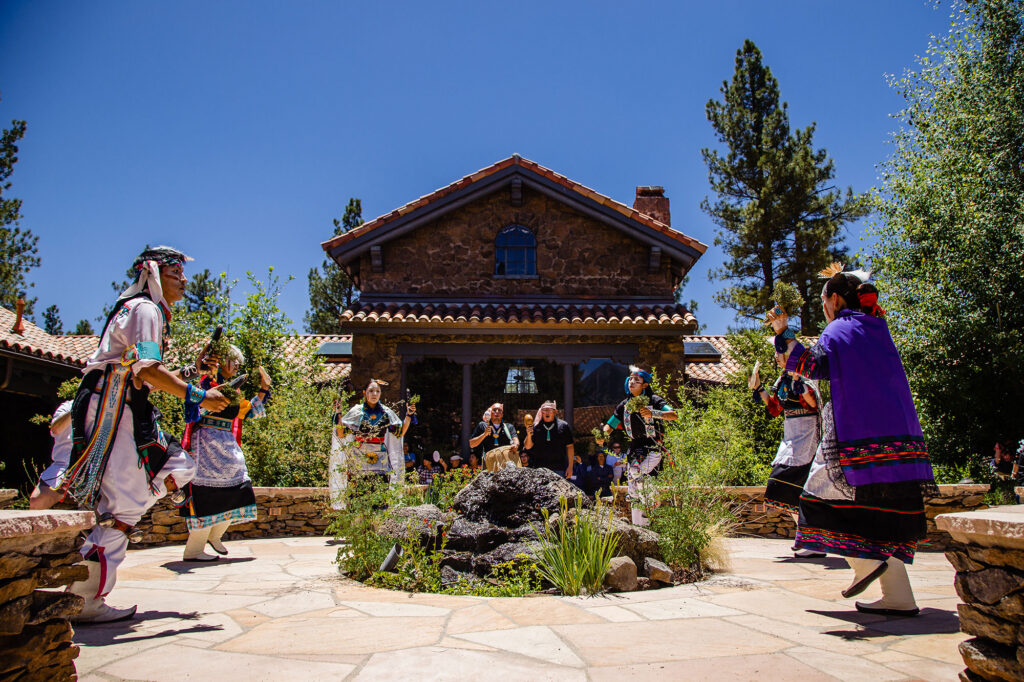
Next, stop in Flagstaff, a high-elevation mountain enclave tucked along Route 66 and the world’s first International Dark Sky City. Here, downtown streets are illuminated by vintage neon signage and turn-of-the-century buildings house shops, restaurants and breweries. Browse exhibits centered on the Indigenous peoples of the Colorado Plateau at the Museum of Northern Arizona. At Lowell Observatory, admire constellations through high-powered telescopes and stargaze from the open-deck observatory. Don’t miss Wupatki National Monument — one of Arizona’s 13 Dark Sky Parks — to see breathtaking celestial views above ancient Puebloan ruins. From Flagstaff, drive about 3 hours north into Monument Valley.
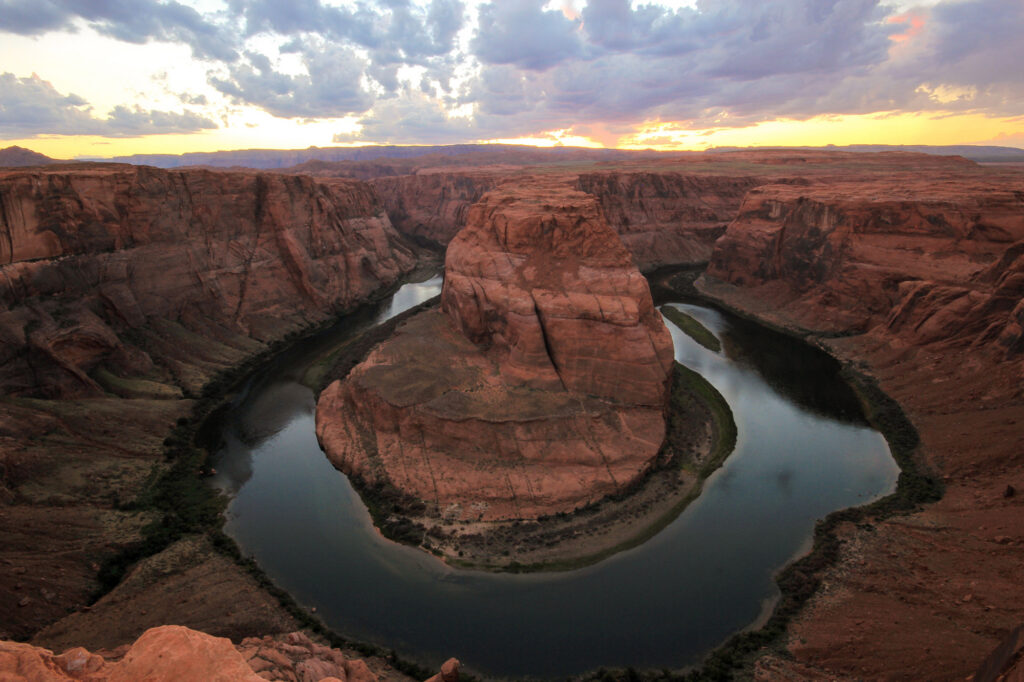
After Monument Valley, head toward Page to witness even more awe-inspiring backdrops, from the sculpted rock formations of the Colorado Plateau to the blue-green waters of Lake Powell. At Horseshoe Bend, the Colorado River curves dramatically below a sandstone overlook just outside town. Page is also a gateway to the North Rim of Grand Canyon National Park, a quieter, forested counterpart to the more visited South Rim. Open seasonally from late spring through fall, the North Rim offers cooler temperatures and a sense of solitude that heightens the canyon’s scale and beauty.
Towns like Williams and Kingman keep Route 66’s legacy alive. In Williams, check out neon signs, classic diners and quirky shops celebrating the Mother Road’s golden age. Pop into the Gallery in Williams to see works by more than 40 northern Arizona artists, and browse cases of pottery, jewelry and artwork by Navajo and Hopi artists at Thunder Eagle. Continue west along preserved stretches of the highway toward Kingman, where railroad history and road-trip culture intersect. Learn more at the Arizona Route 66 Museum, where murals, dioramas and artifacts capture the history of the route.

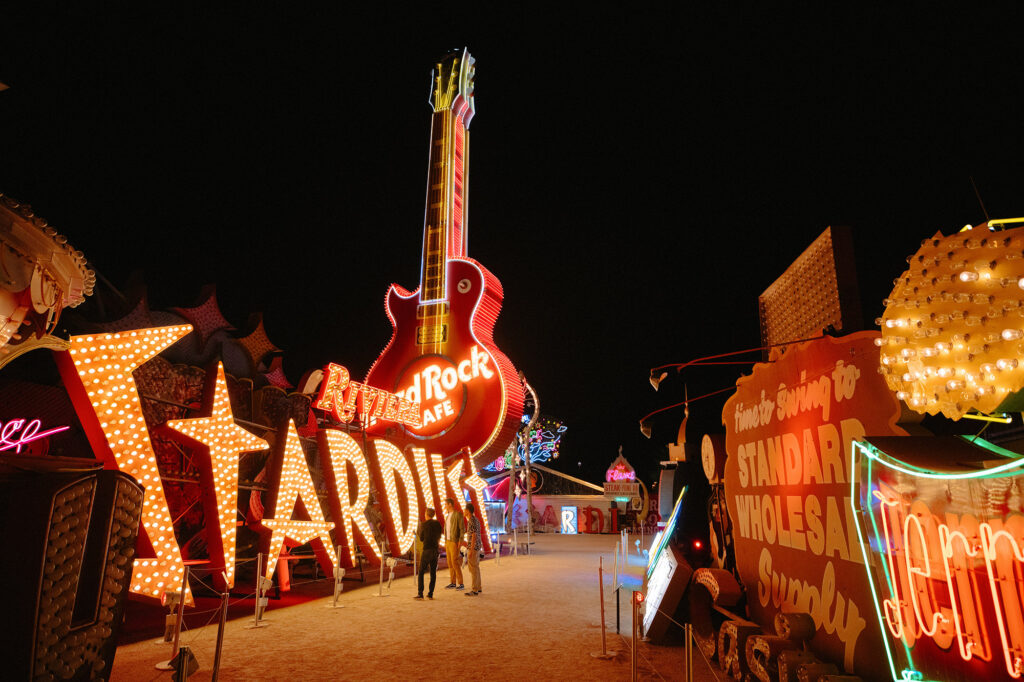
Las Vegas, Nevada, is a fitting last stop, where the neon glow, dramatic architecture and anything-goes energy has drawn filmmakers since the early 20th century. Visit downtown’s Neon Museum, an outdoor gallery of restored signs that chronicles the city’s evolution through bold visuals. Cruise the Las Vegas Strip, a world-famous boulevard lined with dozens of hotels and casinos of all sizes. No visit is complete without seeing The Sphere — the largest spherical structure in the world at 112 meters tall and 157 meters wide. Watch the mesmerizing exterior screen, a giant digital canvas of LED panels; or catch a bucket-list-worthy show or concert inside.
MORE TRIP IDEAS
Arts & Culture
Outdoors
Road Trips
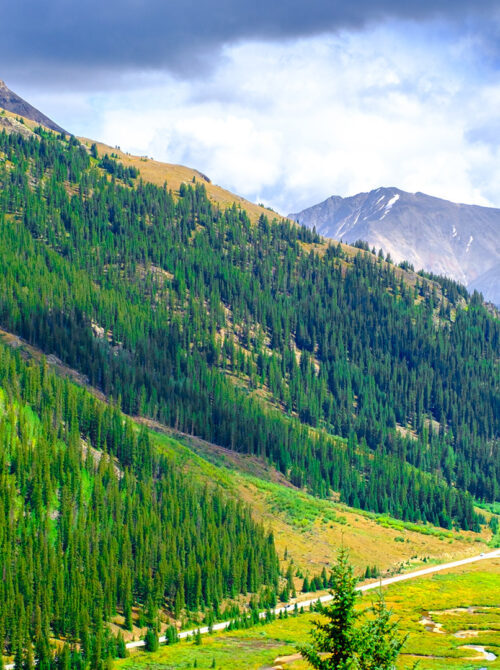
Skyline to Summit: Map the Ultimate Colorado Adventure
Iconic byways, natural treasures and storied mountain enclaves drive Colorado discoveries.
Read Article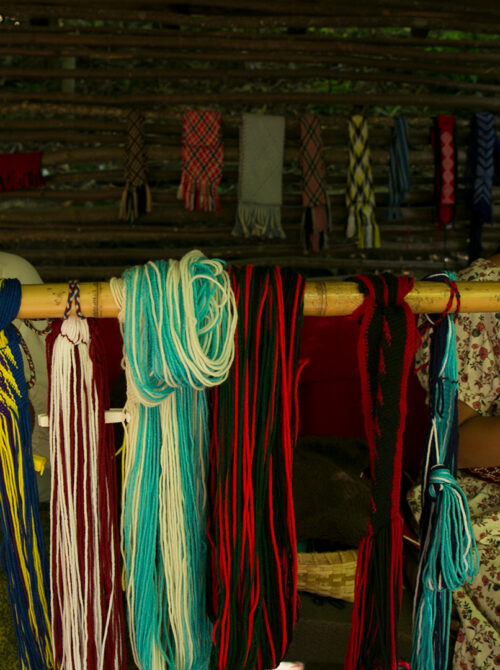
Arts & Culture
Culture & History
Indigenous Heritage
5 Places for One-of-a Kind Immersive Indigenous Experiences & Shopping
Discover how authentic Native American culture and craftsmanship are intertwined in historic locations across the USA.
Read Article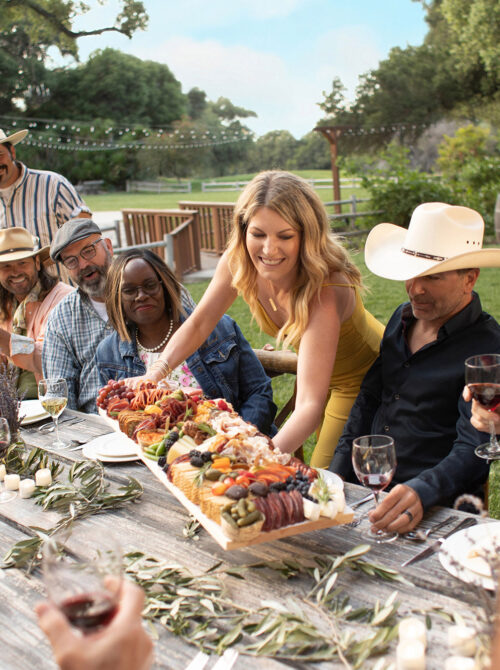
America250
Arts & Culture
A USA Culinary Journey
Get to know the people, history and culture of the country through its food.
Read Article
Arts & Culture
Road Trips
Southern Treasures and Culinary Delights
Get a taste of the food, fun and flair of the Southern USA.
Read Article
Family
Outdoors
Fresh-Air Fun That’s Kid-Approved
Create lasting memories on a family vacation exploring these icons of the USA's great outdoors.
Read Article
Food & Drink
Road Trips
Route 66
6 Places To Eat Along Route 66 From Los Angeles To The Grand Canyon
There are few better ways to experience authentic USA food than to sample the cafés and diners along iconic Route 66.
Read Article