Experience Indigenous traditions and a glimpse into history across the Southeast.
From the mountains and forests to marshes and barrier islands, Indigenous peoples have inhabited the Southeastern USA for at least 15,000 years. Visit reservations to learn about these cultures through immersive experiences, and explore heritage sites that display relics of the past and show how ancient Indigenous peoples lived on and used their ancestral lands.
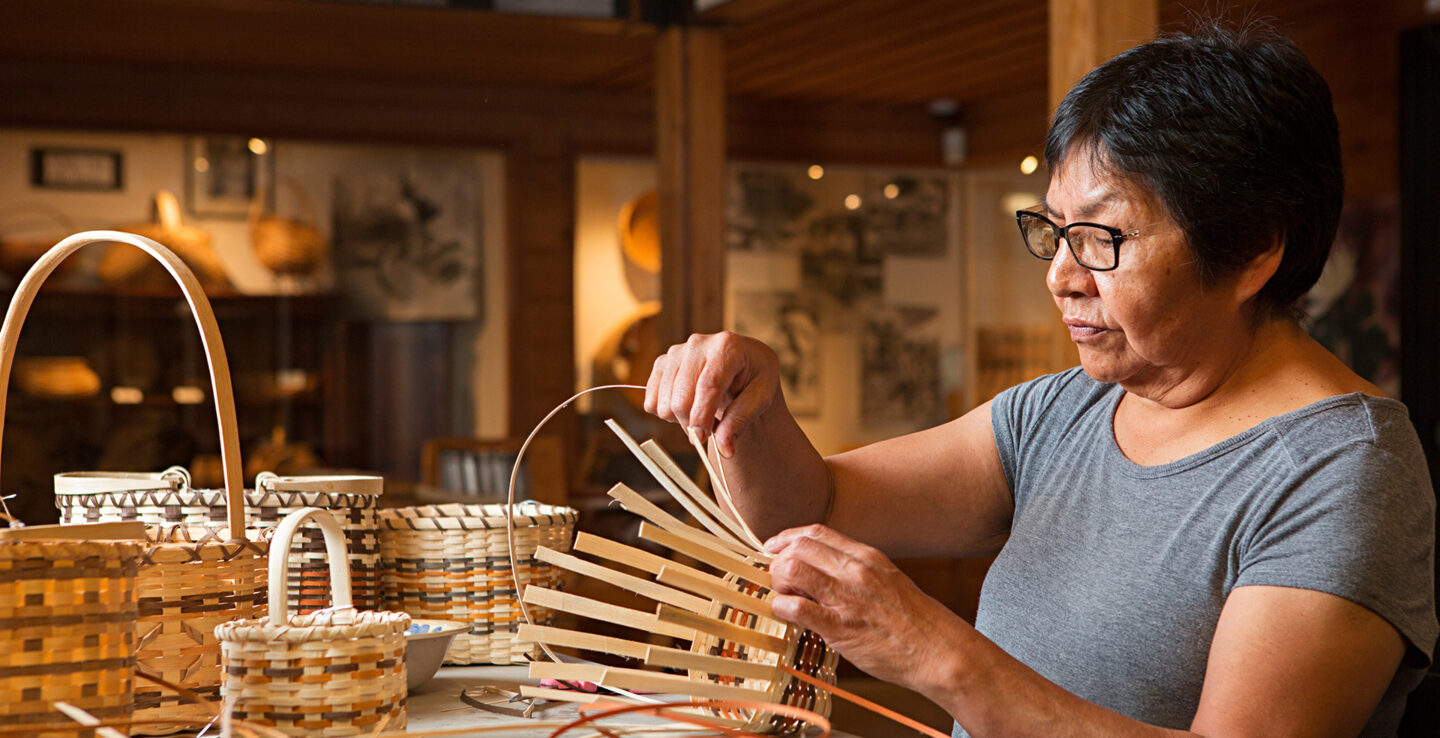
The Great Smoky Mountains are home to sweeping vistas, waterfalls, diverse plant and animal life and the Cherokee people who have a sacred relationship to the land. Explore Oconaluftee Indian Village, an award-winning living history museum with historically accurate replicas of a 1760s Cherokee community. Learn about their traditional government and craftsmanship like basket weaving and pottery. Take in views of seven states from Clingmans Dome, the highest peak in the Smoky Mountains, recently reclaimed by the Cherokee and renamed Kuwohi. Shop authentic Cherokee crafts at Qualla Arts and Crafts Mutual, the oldest Native American cooperative in the USA, representing over 300 Cherokee artisans. The multi-sensory outdoor drama “Unto These Hills” tells the story of the Cherokee under a blanket of stars.
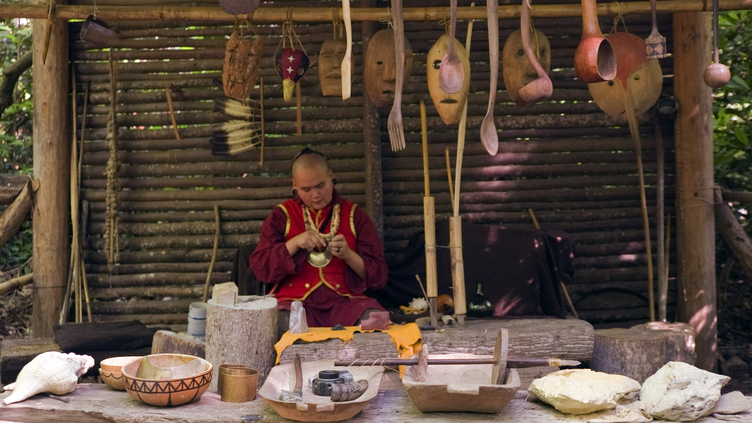
The maritime forests and salt marshes of Eastern North Carolina are home to the Lumbee Tribe, the largest Native Ameican tribe east of the Mississippi River. Visit the Museum of the Southeast American Indian in Pembroke, North Carolina, to see impressive artifacts, including a 1,000-year-old dugout canoe from a nearby river. The museum is located on the campus of the University of North Carolina at Pembroke, the only state-supported school in the USA created by and for American Indians. The tribe’s main annual celebration, the Dance of the Harvest Moon Powwow, features traditional dancing and drumming along with a living village, local artisans and traditional food.
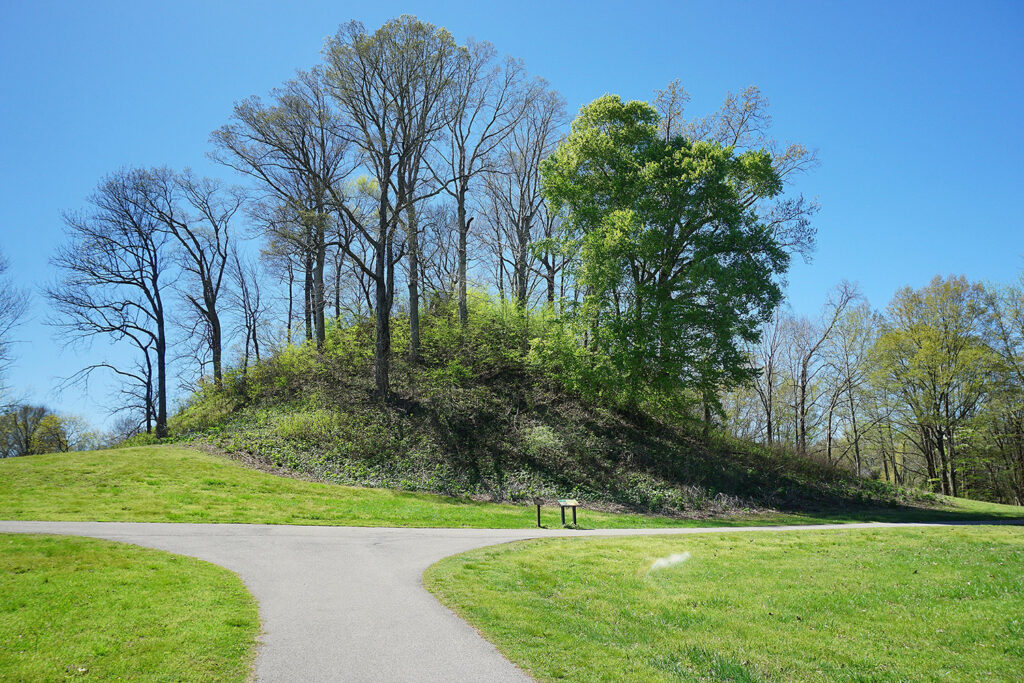
Pinson Mounds State Archaeological Park in Pinson, Tennessee, contains over 17 mounds including Saul’s Mound, the second tallest mound in North America. Evidence suggests the site was used for trade and ceremonies. Tour the on-site museum built into a replica mound. C.H. Nash Museum at Chucalissa in Memphis is an archaeological site and museum in one with excavated Mississippian earth mounds and a reconstructed 15th- century Mississippian village. For a mix of history, archaeology and nature, visit Old Stone Fort State Archaeological Park in Manchester. The “fort” is a complex of walls and mounds aligned with the Summer Solstice and used for ceremonies and gatherings.
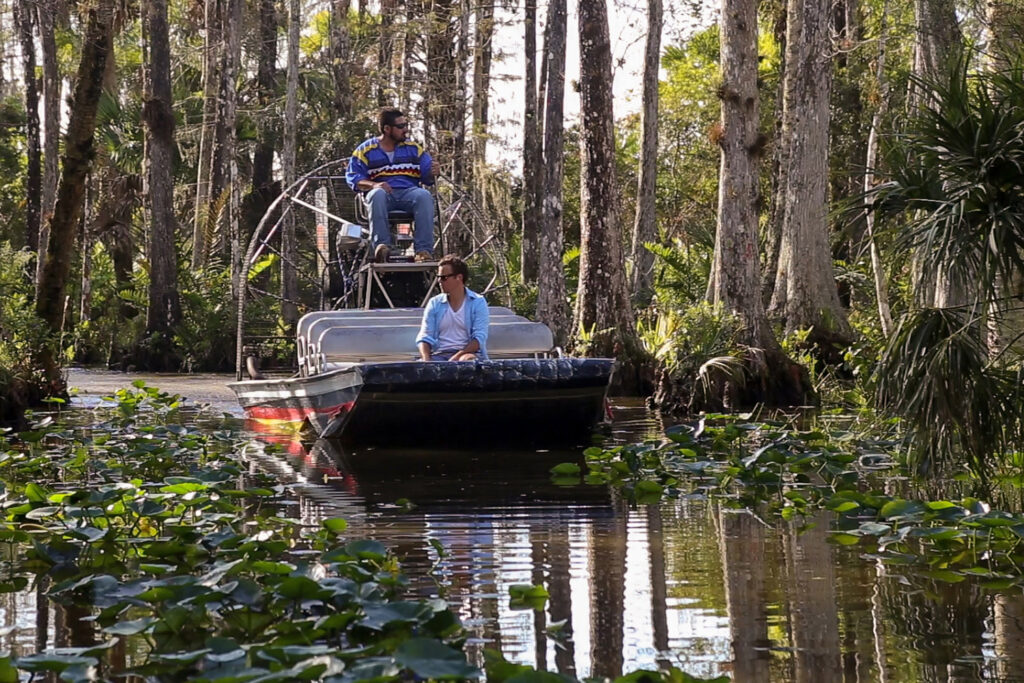
The Florida Everglades are the largest subtropical wilderness in the USA and are home to thousands of plant and animal species. A UNESCO World Heritage Site, this is the only place on Earth where alligators and crocodiles coexist in the wild. Explore Big Cypress Reservation, the ancestral home of the Seminole Tribe of Florida. At the Ah-Tah-Thi-Ki Museum, view a vast array of Indigenous artifacts and a traditional hunting camp. Stroll the boardwalk through a cypress dome leading to a Living Village where artisans demonstrate traditional techniques. Billie Swamp Safari offers alligator shows, airboat rides and swamp buggy tours perfect for spotting wildlife.
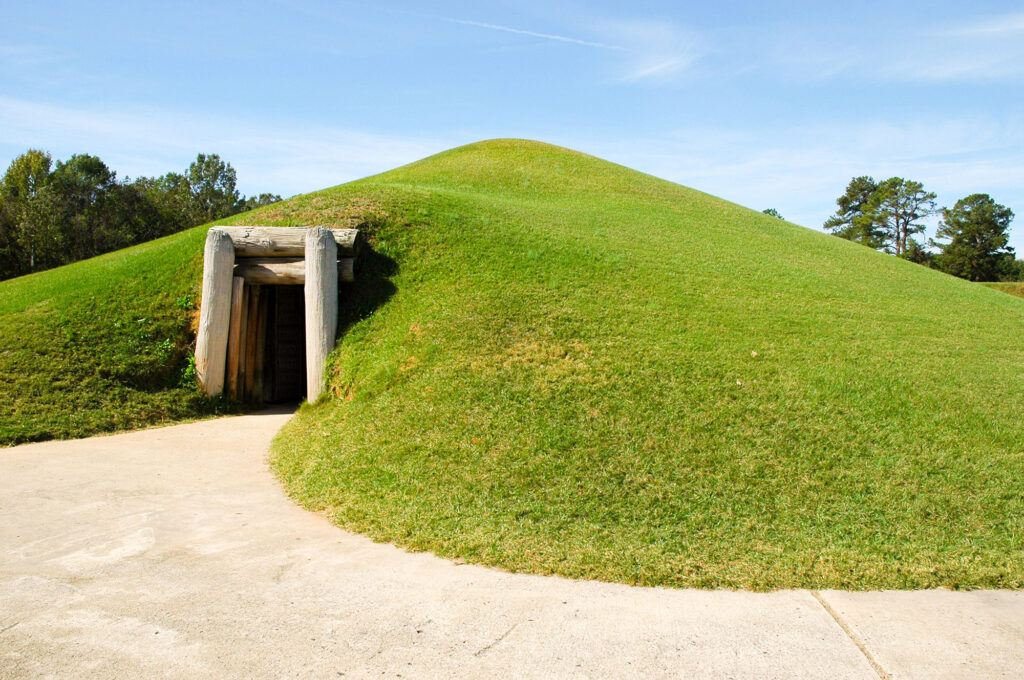
In Macon, Georgia, tour Ocmulgee Mounds National Historic Park, a sacred site to the Muscogee (Creek) Nation, preserving 17,000 years of history. Discover eight earth mounds, including a temple and funeral mound, as well as the only known spiral staircase mound in North America. The park features a reconstructed 1,000-year-old council chamber with an original clay floor open to visitors. In the Appalachian foothills, Etowah Indian Mounds in Cartersville are the most intact Mississippian site in the Southeast. This active archeological site and museum are famous for unique, high-quality artifacts found during digs. See stone effigies, weapons and copper plates plus six major mounds, a village site and a surrounding defensive ditch.
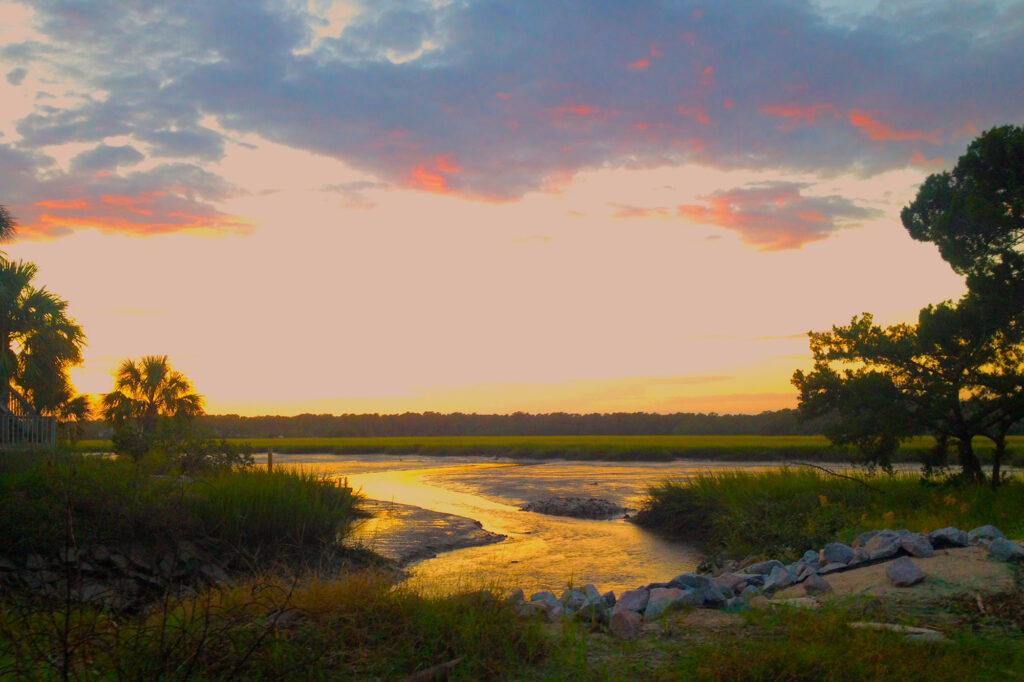
South Carolina’s coastline features dozens of ancient shell mounds left by past inhabitants. These Indigenous peoples ate a seafood-rich diet and used discarded shellfish remains to create ceremonial, social and burial sites. Shell mounds, or shell middens, are ring-shaped structures that show where ancient people once gathered. Spanish Mount Point at Edisto Beach State Park is a 4,000-year-old mound containing ancient pottery. The shell mounds on Fig Island are some of the largest and most complex, as well as the best preserved. They date back more than 4,000 years, reach up to 6 meters high and are impressively symmetrical. Green’s Shell Enclosure on Hilton Head Island consists of low-lying circular embankments believed to have been a defensive feature.
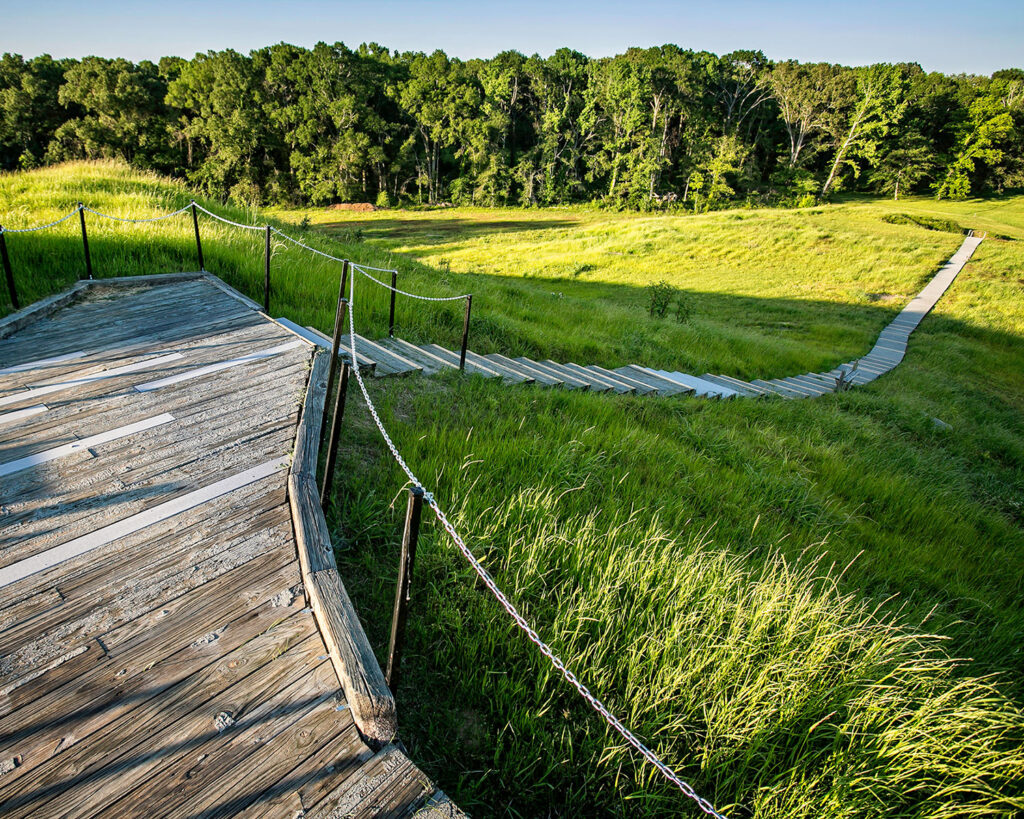
While researchers are still unearthing the full story of Poverty Point’s 3,400-year-old earthen mounds, this UNESCO World Heritage site is believed to have been a bustling center of commerce and culture home to nearly 5,000 inhabitants. Explore five massive half-circle-shaped mounds along scenic hiking paths and tour the on-site museum, which interprets what is currently understood about the history of the site and those who lived there. Poverty Point is in the town of Pioneer, about four hours north of New Orleans near the Mississippi and Louisiana border.
Several museums also highlight the artifacts and lifestyles of the state’s Indigenous peoples. The Chitimacha Tribe is the only Native American nation in Louisiana to still occupy part of their original homeland, and the tribe-operated Chitimacha Museum in Charenton preserves centuries of artifacts, clothing and river cane basketry. Just outside Alexandria, the Tunica-Biloxi Museum showcases the “Tunica Treasure,” a wide-ranging cache of Native American and European trade items and artifacts that were repatriated to the Tunica-Biloxi Tribe of Louisiana in the 1980s. Visit Shreveport to tour the Louisiana State Exhibit Museum’s collections and exhibits focused on Poverty Point and the Caddo Confederacy.
MORE TRIP IDEAS

Outdoors
Road Trips
Route 66
Natural Wonders Near Route 66
With the lure of the open road and its promise of unforgettable adventures, Route 66 has captivated travelers since it opened in 1926.
Read Article
Arts & Culture
Family
Outdoors
Unique FamilY Destinations Across the USA
Discover family-friendly U.S. destinations where theme parks, beaches, culture and wide-open landscapes come together.
Read Article
Family
Outdoors
Grand Adventures & Stunning Vistas in the Western USA
Abundant rugged landscapes and endless ways to explore make a visit to the American West an unforgettable experience.
Read Article
Family
Outdoors
Fresh-Air Fun That’s Kid-Approved
Create lasting memories on a family vacation exploring these icons of the USA's great outdoors.
Read Article
America250
Arts & Culture
Culture & History in the USA: 10 Must-See Sites
From colossal monuments to seaside promenades, connect to the USA’s past at these iconic cultural and historical sites.
Read Article
Outdoors
Amazing Places to Go Scuba Diving in the USA
Towering kelp fields, vibrant tropical reefs and abandoned shipwrecks make the USA the ultimate destination for diverse scuba diving adventures.
Read Article